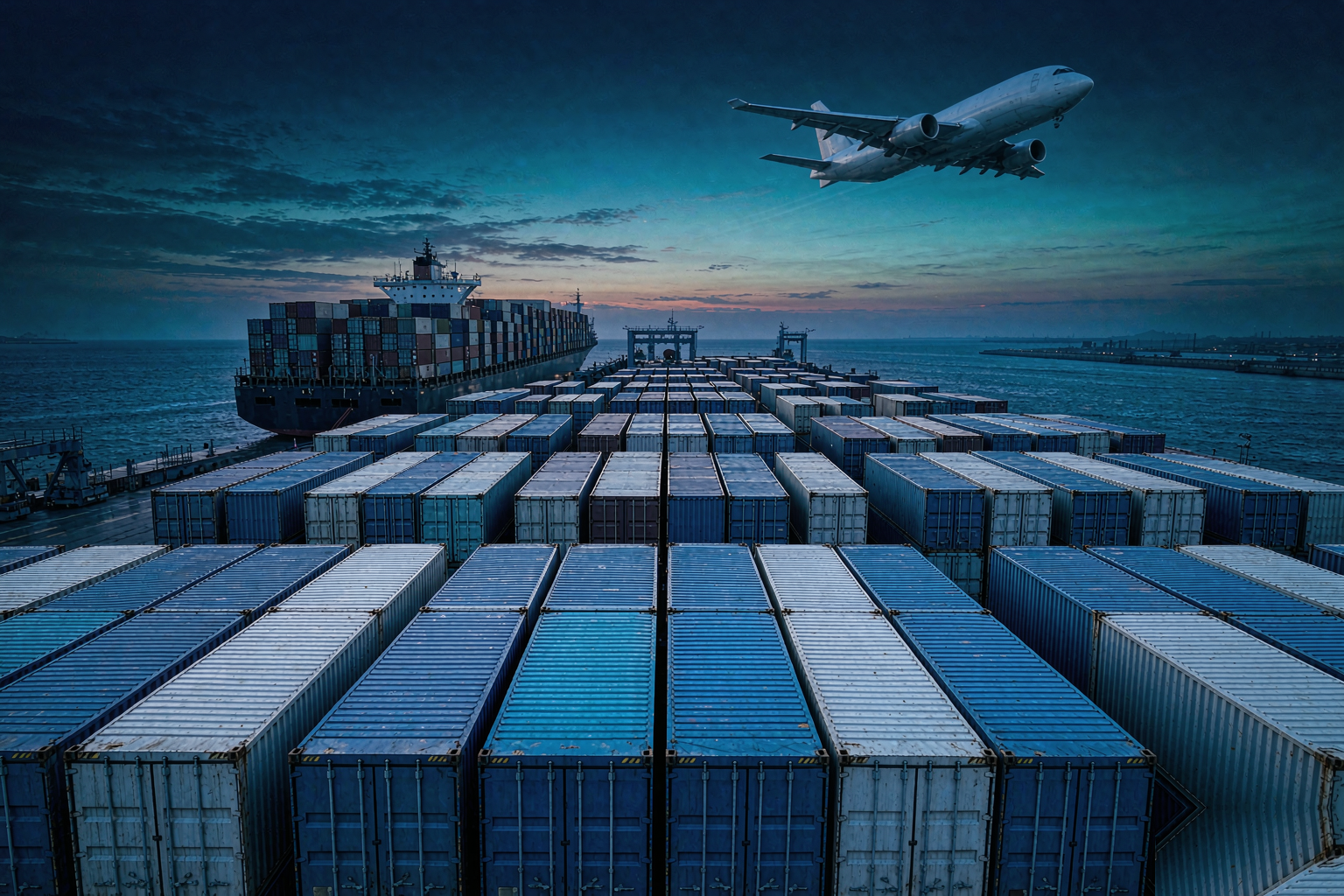
For a mixed-category electronics order, the freight decision moves real money: lead time, landed cost, damage exposure and cashflow all shift between air and sea. Here is the model we walk buyers through.
1. Lead time and predictability
Air freight typically lands in 5–10 days door to door; sea freight runs 25–45 days depending on the lane, plus port congestion risk. Predictability matters as much as speed: air schedules are easier to promise onward to your own customers.
2. Landed cost: a worked comparison
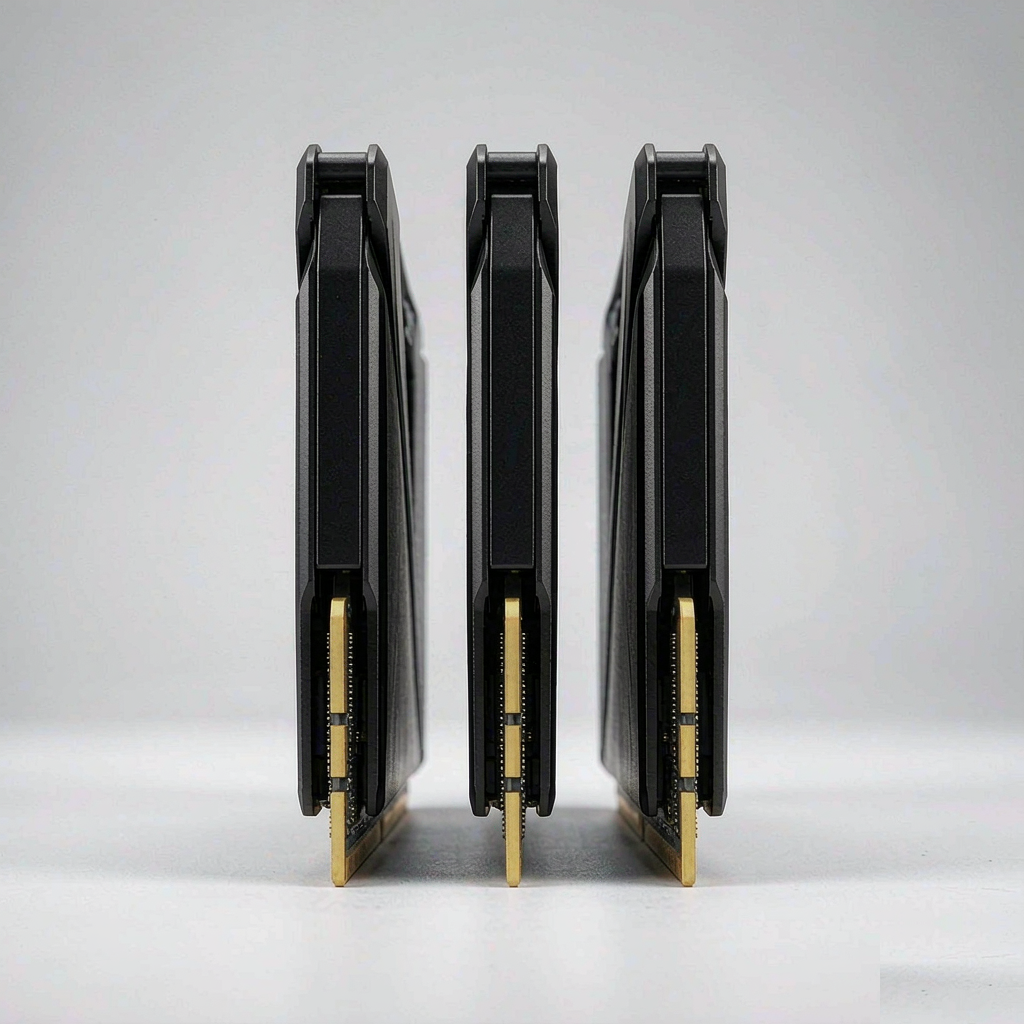
Chargeable air weight prices density — cables and metal enclosures cost far more per kilo in the air than memory modules do. As a rule of thumb, goods valued under roughly US$15–20 per kilo usually justify sea freight; dense, high-value goods such as SSDs and RAM modules often cost little more to fly than to ship.
3. Damage risk and packaging
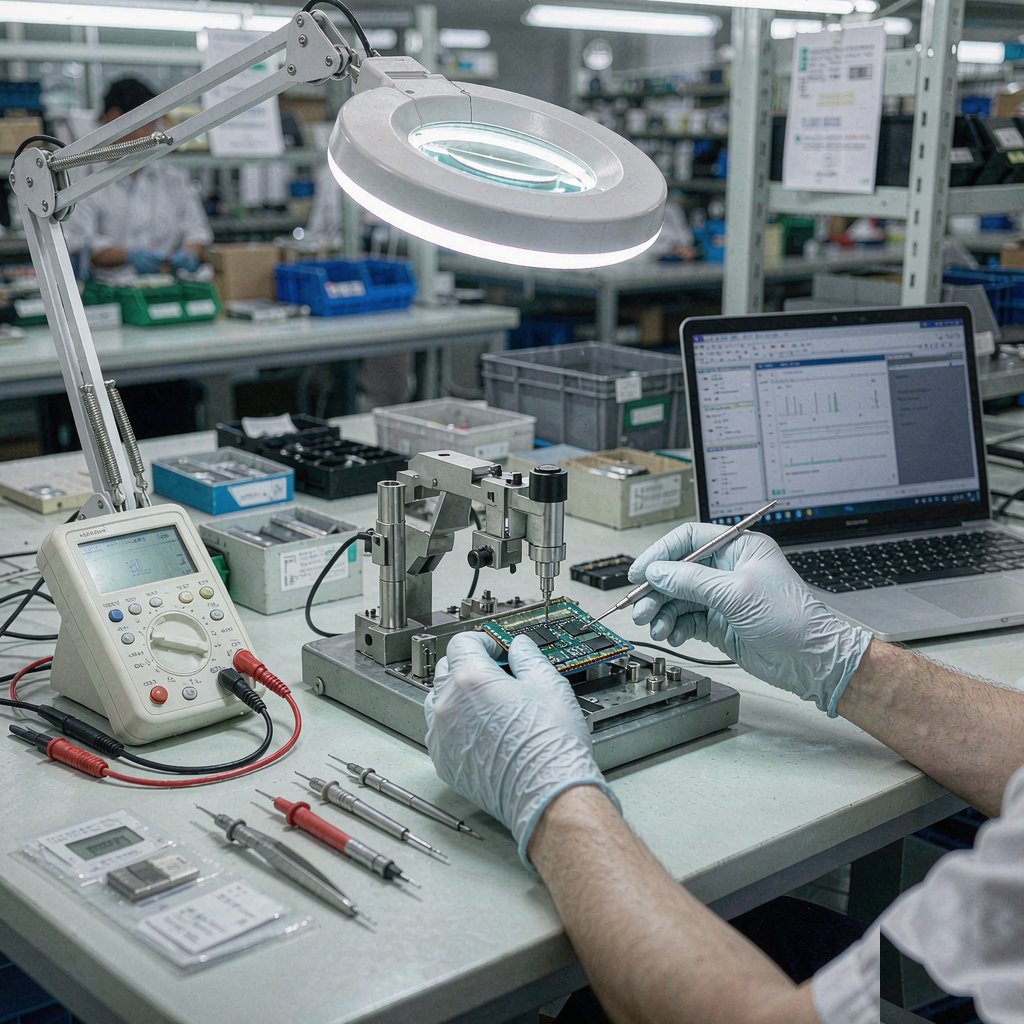
Sea containers cycle through humidity and handling stress; carton consignments need inner packaging rated for the mode. We photograph every carton before dispatch, and for sea shipments of mechanical goods we specify reinforced export cartons and desiccant.
4. Cashflow and incoterms
Sea freight ties up inventory for a month longer before it can be billed onward. If the order funds a committed project milestone, air often pays for itself in schedule protection. Confirm the incoterm — EXW, FOB or DAP changes who books the freight and who carries the risk in transit.
The cheapest mode on the invoice is not always the cheapest in the project. A delayed container that misses a deployment window costs more than the air premium ever did.
Choosing the mode for your order
Send the packing list and destination port or airport, and we will quote both modes with door-to-door estimates so the decision is made on numbers, not habit. Mixed shipments — air for the urgent line items, sea for the rest — are also common.